
We Need More Yearning Men
Oh, How I Love a Good Yearner. | Lessons from Off Campus.
Yearning, in romantic terms, is the quiet, persistent ache to be consumed by another person's presence—to know their soul, understand their heart, and be drawn to everything that makes them who they are. It is a longing that exists even in their absence, one that reaches beyond attraction and into deep emotional desire. Somewhere along the way, however, this generation of men and women who call themselves "lovers" seems to have lost the art of yearning.
To yearn for a lover is to find traces of them in places they have never been. It is to carry the memory of their presence with you and delight in it throughout the day. It is the quiet disarray of your thoughts whenever they are near, the way your mind forgets itself in the comfort of their existence. It is the desire to be wholly immersed—almost baptized—in their being, in every part of who they are.

Yearning is wanting to be involved in the smallest details of their life, even when your presence is neither expected nor necessary. It is seeing them in places and timelines where reality offers no assurance of them. It is catching the lingering scent of their cologne long after they have gone, holding onto a shirt they left behind because, somehow, it still feels like them. It is remembering the warmth of their touch as though their hands are still grazing your skin, or the sweetness of a kiss long after your lips have parted. Yearning is loving someone so deeply that even their absence refuses to feel empty, because every part of the world seems to echo their presence.
Having a crush is exhilarating, but yearning, yearning exists on an entirely different plane. A crush is excitement; yearning is devotion. It is slower, deeper, quieter. It is an art.
Our generation has grown out of touch with the quiet beauty of genuine, healthy love and with the art of expressing it. We have become fluent in attraction and infatuation, yet increasingly unfamiliar with the kind of love that lingers, stays, and yearns.
It’s almost unsettling that some of the truest portrayals of yearning are found in fiction. We encounter them in novels, films, book adaptations, and other forms of art that dare to linger on love instead of rushing through it. Has yearning become so rare that it now feels like something reserved for fiction?
Perhaps that’s why so many people are drawn to romance stories that portray women being deeply desired with tenderness and respect. For a moment, those stories transport them to a world that often feels unreachable in real life. They remind us of a kind of love many people hope exists, but rarely witness. It is why so many of us, myself included, are captivated by modern romance stories that choose to center yearning alongside love, proving that the deepest romances are often built not on grand declarations, but on quiet longing.
Even then, many of the books we read and the shows we watch are still laced with toxicity, often confusing unhealthy attachment with romance. It’s become so common that genuine love can feel almost unfamiliar on screen.
It’s been a long time since I watched a series where the men were emotionally healthy, genuinely yearned for the women they loved, and allowed that yearning to grow into real, intentional love. Off Campus was the first high-groove romance adaptation in a long while to give me that feeling. Since films like To All the Boys I’ve Loved Before, The Kissing Booth, 13 Reasons Why, and others, countless romance dramas have been released, but very few have captured what the writers, producers, directors, and cast of Off Campus managed to create.
There is something enchanting about that series. It isn’t just that every character is incredibly attractive. It’s the care that was poured into shaping their stories, their mannerisms, and the way they love. Every lingering glance, every hesitant touch, every moment of restraint feels intentional. The romance doesn’t ask you to believe in love because the characters say the right words. It asks you to believe because they yearn first.
Over time, we’ve watched countless high school and college romance stories give us male leads who were undeniably attractive but deeply toxic. Their behavior was often explained away by trauma, a difficult childhood, or some profound emotional wound. While those experiences can shape a person, they should never excuse cruelty. Yet, somehow, we were persuaded to overlook the toxicity because the romantic leads had undeniable chemistry and looked good together.
Off Campus, however, takes a different approach. Garrett, the male lead, carries his own emotional burdens and past wounds, but he isn’t a jerk because of them. That alone feels refreshing. It is almost ironic because sports-coded love interests in college or high school shows are usually introduced as arrogant, emotionally unavailable, or outright awful. The audience is then expected to wait for love to “fix” them, usually through the patience and emotional labor of the female lead. It’s a familiar trope, but that trope rarely reflects how healthy relationships should actually work.
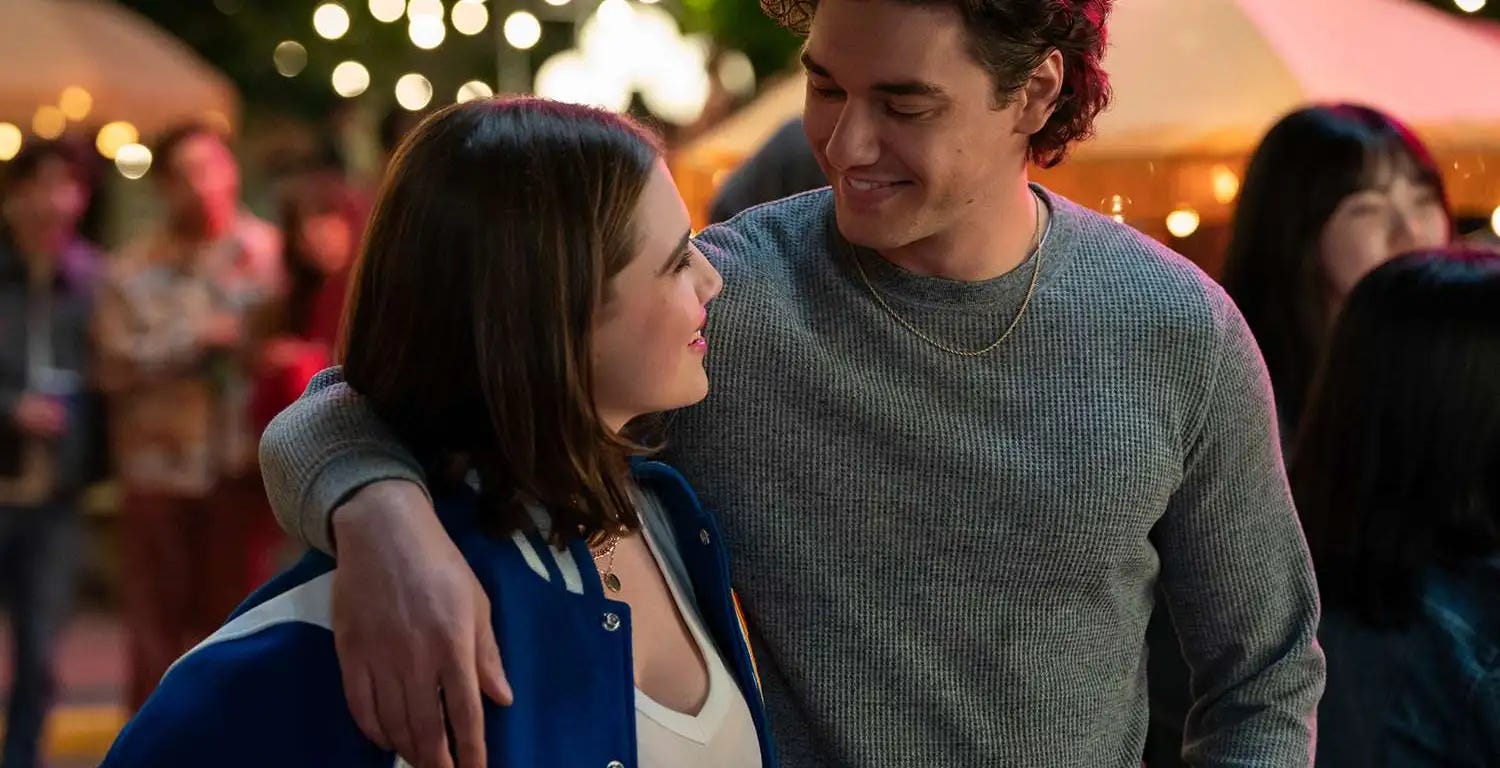
Instead, Garrett begins as a fundamentally decent person. He initially has his flaws with promiscuity, but he remains a decent person overall. His love doesn’t transform him into someone worthy of affection. Rather, it gives him the courage to become an even fuller version of who he already is by heart. There is a significant difference between redemption through accountability and redemption through romance, and Off Campus understands that distinction.
Garrett’s yearning is revealed in subtle, yet consistent ways. Once he realizes that his feelings for Hannah are real, he becomes steady, intentional, and emotionally present. He doesn’t simply tell her he wants to be with her. He shows it. His love is evident in the way he pays attention to her, looks out for her, makes her feel safe, and cares for her without asking for anything in return.
One defining moment comes when Hannah becomes unreachable during one of the most important hockey games of his career. Garrett keeps trying to reach her, but she doesn’t answer. If we’re being honest, he needed her in that moment. Still, he understood that Hannah was a whole person with struggles and responsibilities that existed outside of him. So when she finally appeared, he didn’t lash out or make her feel guilty, as many viewers expected he would. Instead, his first response was concern. He wanted to know if she was safe. He wanted to know if she was okay.
That scene stayed with many viewers because romance stories like these rarely allow their male leads to respond with emotional maturity. We have become so accustomed to possessiveness being mistaken for passion that genuine care feels almost revolutionary. Garrett reminds us that yearning is not about demanding someone’s presence. It is about caring for their well-being, even when your own heart is aching.

Another part of the show that sold audiences was how well they portrayed true love and yearning. When you yearn for someone, love comes easily. Yearning will make you want to drop everything to really study and know your lover. It compels you to notice the little things, to understand their fears, habits, dreams, and contradictions. To yearn for someone is to commit yourself to knowing them, over and over again. This is something the men in Off Campus do remarkably well.
Some of the male leads are introduced as men who prefer casual flings and fleeting fun because they don’t believe they’re capable of sustaining meaningful relationships. At first glance, they seem emotionally unavailable. As the story unfolds, however, we discover that they were never truly opposed to love. What they lacked was the experience of encountering a love that made them want to stay.
It is obvious from the beginning that Garrett’s feelings for Hannah extend far beyond mere attraction. “Like” is too small a word to describe what exists between them. He yearns for her. The same emotional progression appears when Dean realizes that what he feels for Allie is deeper than fleeting desire. His instinct is no longer to avoid intimacy but to embrace it. Their stories suggest that it was never about hating love. It was about meeting someone who awakened the desire to love differently.
Beyond romance, the show gives equal attention to friendship in all its forms: the difficult moments, the joyful ones, the ordinary days, and the laughter that quietly holds people together. Friendship becomes the thread that ties the entire story together.
One of the most meaningful moments comes when Hannah encourages Garrett to open up to his friends about his trauma. At the time, Garrett believes Hannah is all he needs. But his decision to eventually confide in Logan becomes a reminder that love and friendship are not competitors. They complement each other. Sometimes, telling your partner everything isn’t enough, not because they don’t care, but because one person should not be expected to carry every emotional burden. That is why friends matter.
What Off Campus does so beautifully is refuse to place romantic love above platonic love. Instead, it presents them as relationships that nourish one another. The series is filled with moments of healthy male friendship that are rare to witness in real life. Logan being present for his friends, Dean advising Garret to go after Hannah, Beau making Dean realise his feelings for Allie, Tucker quietly caring for everyone through small acts of service, constantly cooking, cleaning, and making sure the people around him are looked after—things the average male friendships fundamentally lack. Justin was also very respectful of Hannah, her love decision, and her craft. None of these gestures are treated as extraordinary. They are simply expressions of love between friends.

The women are given that same generosity. Hannah and Allie are genuinely present in each other’s lives, supporting one another without unnecessary rivalry or manufactured conflict. Even Kendall isn’t portrayed as the stereotypical “jealous ex.” She isn’t written as a woman determined to steal Garrett back, nor does she resent Hannah for loving him. In a genre that often pits women against one another for the sake of drama, that choice feels pleasantly new.
The male leads didn’t rely on misogynistic humor or degrading comments to establish their masculinity. Instead, they showed genuine love and care for the women they were interested in and those around them.
The show also explains that while trauma can shape our lives in different ways, we also have the capacity to reshape it and reinvent ourselves. Trauma can indeed push many to certain heights, but it can’t always be used an excuse for every action. A painful beginning does not have to determine a painful ending. Accountability remains essential, especially when our past causes us to hurt others. Being hurt by our trauma is human, but refusing to take responsibility for that hurt is a choice.
The series also made me think about why so many creators seem creatively adrift today. We often struggle to surrender ourselves to art, to let it speak through us instead of trying to control every part of it. Perhaps it’s because we are afraid of being seen. We hide the imperfect, vulnerable parts of ourselves, convinced they are unworthy of an audience. But art has always asked for honesty before perfection. It asks us to be exposed, to create from the places we spend so much of our lives trying to conceal. Until we are willing to strip ourselves bare, metaphorically at the very least, genuine art will always feel just out of reach.
Another lesson the show quietly teaches is the importance of making your partner feel safe. One of the reasons Hannah chooses Garrett over Justin is because of the emotional safety Garrett creates around her. He feels like home. He pays attention. He sees her for who she truly is. He notices her likes and dislikes, understands her moods, and remembers the little things that make her who she is. Hannah extends that same grace to Garrett, creating a space where he can confront his trauma without fear of judgment.
When safety exists, love has room to flourish. And that is what yearning is ultimately trying to build: not possession or obsession, but a place where two people can be fully known and still choose each other.
Lastly, the series doesn’t simply invite viewers to indulge in another modern romance. It discusses difficult subjects, particularly sexual abuse and assault, themes that many stories of this genre either avoid altogether or resolve too quickly. Off Campus treats these experiences with the weight they deserve, recognizing that they can profoundly alter a person’s life, relationships, and sense of self.
There are countless remarkable things about this series. Beyond its romance, it is the way every theme is woven together with care that makes it memorable. Love, friendship, vulnerability, healing, accountability, and safety all exist alongside one another, creating a story that feels emotionally complete. I can just tell when a show was written by a woman.
If there is one thing Off Campus proves, it is that we need more yearners. We need more men and women who are willing to love with intention, to pay attention, to remain curious about the people they choose, and to make them feel seen. It’s way hotter watching men yearn though. Maybe because we’ve been conditioned to believe that emotional restraint is masculine, making tenderness from men feel almost radical.
Let’s bring back relationships that are fun, where every new day feels like another chance to discover hidden treasure on an uncharted island. Where the mere sight of your lover still sends tingles down your spine. Where sitting beside them on a quiet couch feels more fulfilling than the loudest party. Where every kiss isn’t a routine, but a new discovery, another universe waiting to be explored.
Let’s bring back intentional love. Let’s bring back hot, steamy, yearning. Because yearning is, and always will be, incredibly attractive.
P.S. I do not own the rights to the video clips attached. They are excerpts from TikTok and are included solely for illustrative purposes.